Decoding a Cultural Phenomenon: The "Let's Go Brandon" Chant Explained
In the intricate tapestry of modern political discourse, few phrases have exploded into the public consciousness with the speed and polarizing power of "Let's Go Brandon." What began as a seemingly innocuous misinterpretation at a NASCAR race has rapidly morphed into a ubiquitous anti-Biden rallying cry, signaling dissent and solidarity among a significant segment of the American population. This article delves into the unexpected origins, rapid spread, and lasting implications of a phrase that has transcended its sporting roots to become a potent symbol in the ongoing political narrative.
The Unexpected Genesis: From NASCAR Race to National Slogan
The story of "Let's Go Brandon" begins on October 2, 2021, at the Talladega Superspeedway in Alabama. NASCAR driver Brandon Brown, a 28-year-old rising talent, had just secured his inaugural Xfinity Series victory—a monumental achievement for him and his father's short-staffed, underfunded team. Amidst the celebration, an NBC Sports reporter attempted to interview Brown on live television. In the background, the roar of the crowd was unmistakable, yet its exact words were initially difficult to discern.
The reporter, perhaps attempting to maintain a family-friendly broadcast or genuinely mishearing, suggested that the crowd was chanting, "Let's go, Brandon!" to cheer on the victorious driver. However, to many ears, including those watching and listening closely, the true chant was a far more explicit and politically charged "(Expletive) Joe Biden." This pivotal moment of misdirection, whether intentional or not, inadvertently birthed a new political catchphrase.
The immediate appeal of "Let's Go Brandon" lay in its ingenious "G-rated camouflage." It offered a seemingly benign, outwardly upbeat alternative to a direct, expletive-laden insult. This less polarizing, yet clearly understood, coded message allowed individuals to express strong anti-Biden sentiment in contexts where explicit language might be deemed inappropriate or lead to direct confrontation. It created a subtle nod among those "in the know," fostering a sense of shared understanding and collective protest.
Why "Let's Go Brandon" Resonated So Widely
The phrase's power wasn't just in its coded nature; it tapped into a significant vein of conservative opposition to President Joe Biden. Within days of its inception, "Let's Go Brandon" began to spread like wildfire. Republican lawmakers were among the first to adopt it:
- Florida Republican Rep. Bill Posey concluded an Oct. 21 House floor speech with a defiant fist pump and the cryptic phrase.
- Texas Gov. Greg Abbott tweeted it a day later.
- Sens. Ted Cruz and Mitch McConnell, among others, publicly associated with the slogan, with Cruz even posing with a "Let's Go Brandon" sign at the World Series.
- Former President Donald Trump's campaign PAC quickly capitalized on its popularity, using it in fundraising efforts and selling merchandise.
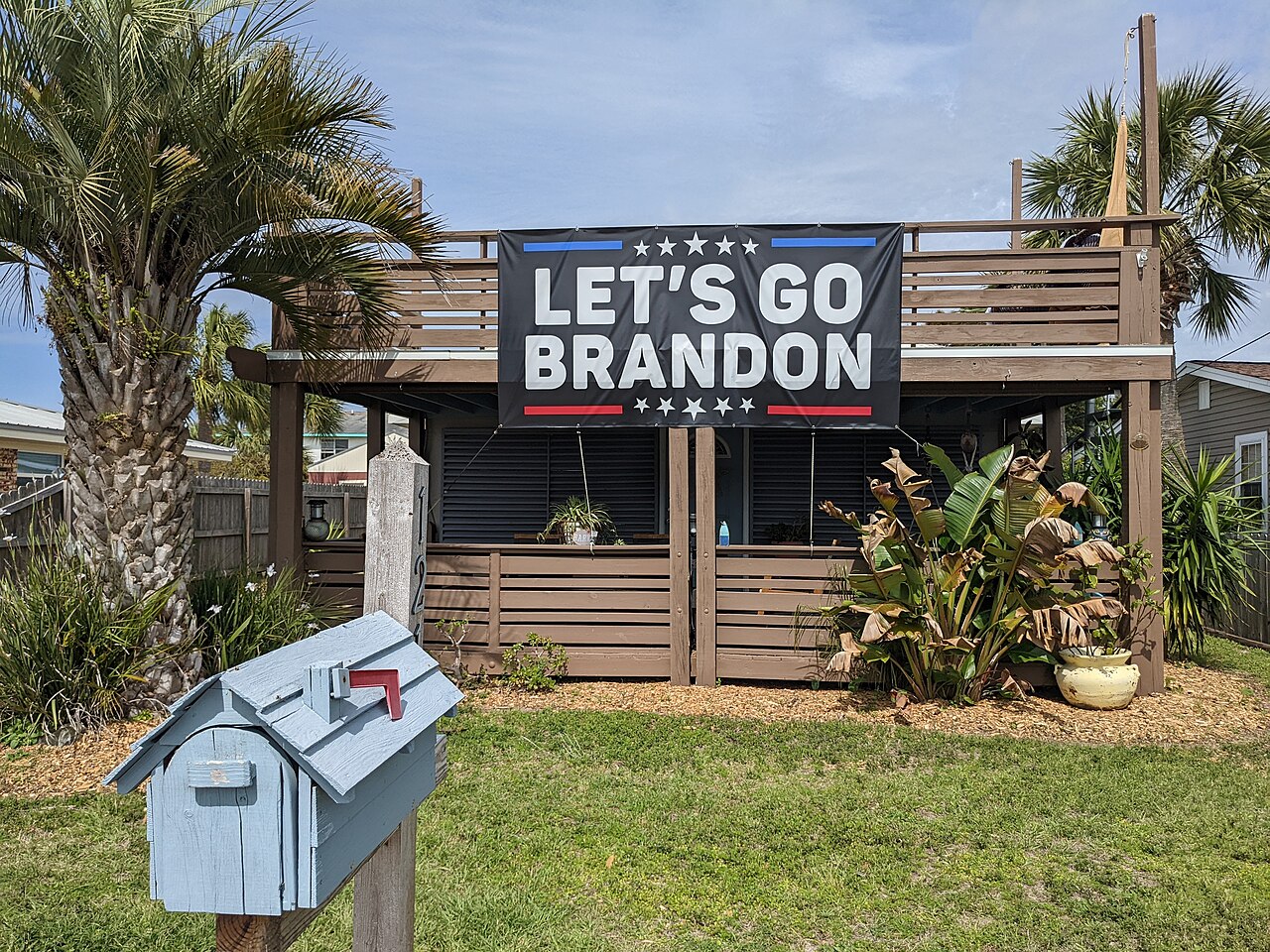
Its appearance wasn't limited to political figures. Musicians integrated it into songs, and it became a common sight at protests against Biden administration policies. From banners displayed along presidential motorcade routes to viral videos of airline pilots signing off with the phrase over public address systems, "Let's Go Brandon" permeated various facets of public life. This widespread adoption demonstrated its effectiveness as a unifying symbol for those disaffected with the current administration, offering a concise and publicly acceptable way to voice their opposition without resorting to vulgarity.
Beyond the Chant: The Impact on Brandon Brown and Public Discourse
While the chant soared to national prominence, its namesake, the "real Brandon"—NASCAR driver Brandon Brown—found himself in an unexpected and often awkward spotlight. For Brown, the initial elation of his first career victory was quickly overshadowed by the political firestorm his name had inadvertently ignited. Driving for a perpetually underfunded team owned by his father, Brown had long struggled for sponsorships. The sudden association with a highly partisan political slogan made an already challenging situation even more complex, as existing and potential partners became wary of marketing a driver whose name was inextricably linked to controversy.
This incident offers a fascinating case study in how seemingly trivial events can be co-opted and amplified by political forces, impacting individuals who are merely caught in the crossfire. Brown's story highlights the collateral effects of viral phenomena, where personal achievements can be overshadowed by external political narratives. The phrase, while boosting the visibility of the "Brandon" name, did little to boost his specific brand in the way a sports victory typically would.
It's crucial to clarify that the "Brandon" in question is NASCAR driver Brandon Brown. The chant has no connection to other notable individuals named Brandon, nor does it refer to their personal achievements, professional careers, or financial status. For instance, discussions around brandon beal net worth—a topic that might interest fans of the singer-songwriter and producer—are entirely separate from the political sentiment encapsulated by "Let's Go Brandon." The phrase is singularly focused on a specific political message, distinct from the myriad of accomplishments associated with others who share this common name. Understanding this distinction is vital to accurately decoding the viral cry and avoiding misattributions of its meaning or intent. The rise of "Let's Go Brandon" is a testament to the power of coded language in modern political discourse, reflecting a desire among some to voice opposition without inviting immediate direct confrontation or censure for explicit language. The phrase's virality speaks to a broader cultural moment where political grievances seek novel and resonant forms of expression.
Navigating the Cultural Landscape: Interpreting "Let's Go Brandon"
The perception and interpretation of "Let's Go Brandon" vary dramatically across the political spectrum. For its proponents, it's a clever, unifying, and publicly acceptable way to voice deep frustration with the Biden administration. It serves as a badge of honor, a secret handshake among those who feel their concerns are unheard or dismissed. For opponents, however, the phrase is often seen as disrespectful, crude, and a thinly veiled expression of animosity that undermines civil political discourse. It represents a degradation of political language and an unwillingness to engage in substantive debate.
The phrase's staying power lies in its versatility. It can be whispered, chanted, printed on merchandise, or used as a punchline, always carrying its underlying political message. It embodies the modern political landscape's growing reliance on symbolism and coded communication, especially in an era of heightened polarization. As a form of protest, it's both subversive and overt, allowing for deniability while simultaneously broadcasting a clear stance.
For more insights into the origins and impact of this phenomenon, consider reading Unpacking "Let's Go Brandon": Origin, Meaning, and Political Rise. You can also explore its journey from a simple sports chant to a political slogan in From NASCAR Chant to Political Slogan: The Rise of "Let's Go Brandon".
Conclusion
"Let's Go Brandon" is more than just a phrase; it's a socio-political phenomenon that emerged from a misheard chant and quickly embedded itself in the fabric of American political expression. It exemplifies how language can be adapted to serve specific political purposes, offering a "G-rated" alternative for expressing strong dissent. While its origins were accidental, its adoption was deliberate, turning a NASCAR driver's name into a shorthand for anti-Biden sentiment. The phrase continues to resonate, reflecting ongoing political divides and the ingenious ways people find to voice their opinions in a complex public sphere, a context far removed from considerations such as brandon beal net worth or the personal fortunes of other public figures.
